Aghnia Amalia · 18.06.25 · Review
Bahasa Indonesia · Deutsch
Omah Budoyo Yogyakarta
June 18 – August 18 2025
ISA Art Gallery Jakarta
February 27 – April 04 2025
The Paper Menagerie, Ken Liu’s 2011 short story, depicts the identity struggle and cultural dissonance of a child born to an American father and a Chinese-Hong Kong mother. In the face of language barriers and cultural distance, the mother bridges their relationship by folding paper into origami figures-then giving them the ‘breath’ of life-as a form of affection and a channel of communication that cannot be conveyed through language.
This exhibition takes inspiration from that story. Through twenty-nine artists, paper is presented not only as a medium for art, but also as a container that carries history, narrative, and resistance. Each work offers different layers – fragility and strength, preservation and subversion, permanence and transience – presented through four subthemes with the story of The Paper Menagerie as its axis.

In the series Purnatva and Sunyata (2025), Sebastianus adapts the wax resist technique in black ink and photo mosaic on textured paper. By arranging the pieces of photos in a certain pattern, he creates a fragmented image of memory-some parts are connected, while others are blocked by empty space due to black ink. These photographs can be interpreted as representations of memory and human relationships, reflecting dynamic connections and separations. This technique strengthens the resonance of his work with the subtheme The Cartography of Displacement: Fold, Tears, and The Fragility of Belonging.
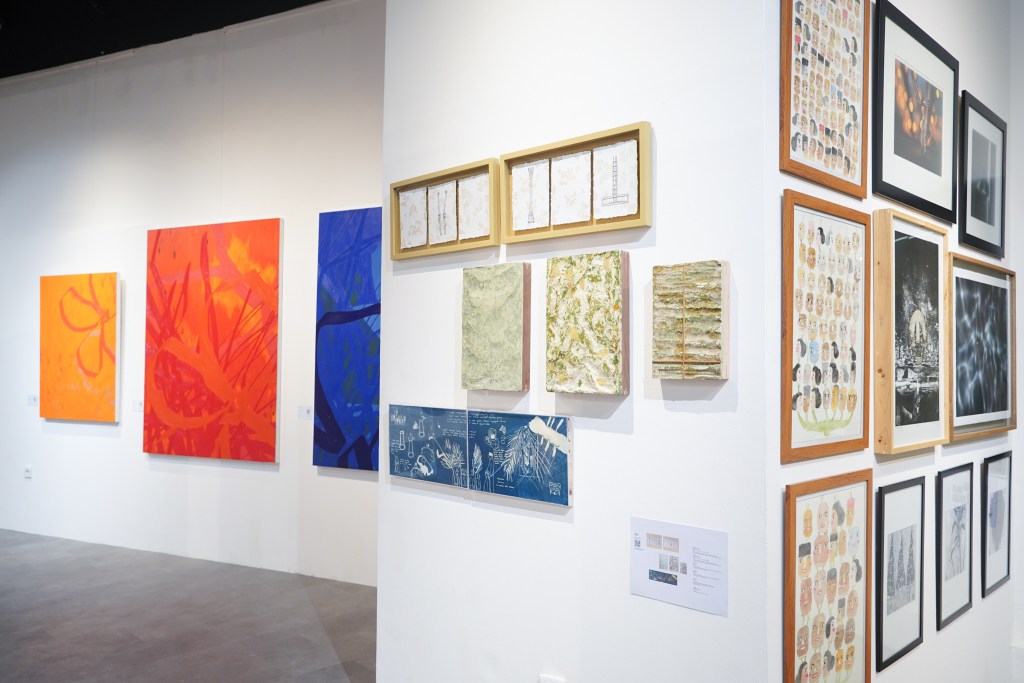
Aurora Arrazzi represents memory recording in the subtheme The Tactile Touch: Paper as An Archive of Memory through her work, The Sound Under My Shoe (2025). Arrazzi explores paper as a space that actively records traces of travel. Through folds of paper inserted with small objects such as stones and tissues, he reflects on the simple experience of walking, where our steps unconsciously collect fragments of the world around us. This work presents paper as a sensory archive that connects body, space and memory.

Paper, though thin and fragile, is also a subtle yet profound medium of resistance. In the subtheme Layers of Resistance: Paper as A Site of Protest and Subversion, Arahmaiani presents three monochromatic acrylic paintings in the series Suara Alam (2024), each with a distinctive symbolism. In Suara Alam 1, a banyan tree stands firmly, symbolizing deep-rooted endurance. In Nature Sounds 2, a tree with a branching trunk and branches stands with the moon in the background, creating a meditative atmosphere in the cycle of nature. Nature Sounds 4 features three fir trees standing apart, emphasizing both isolation and resilience in solitude. Using paper-a material derived from the trees themselves-Arahmaiani asserts that nature speaks, of endurance and silent resistance, in its own, often overlooked way.
Meanwhile, the subtheme Breath and Dynamism: Paper as A Vessel of Storytelling explores paper as a vessel of storytelling. Iwan Effendi, through Papermoon Puppet Theater, has long explored human nature through his paper puppet figures. In the Portrait series (2020-2025), he uses charcoal pastels to paint figures that resemble his paper puppets-silent, yet full of emotional expressions captured in graded strokes. With the erasable and changeable medium of charcoal pastels, Iwan displays the dynamic and transient nature of memory and existence, and gives narrative to static figures through expressive charcoal strokes.
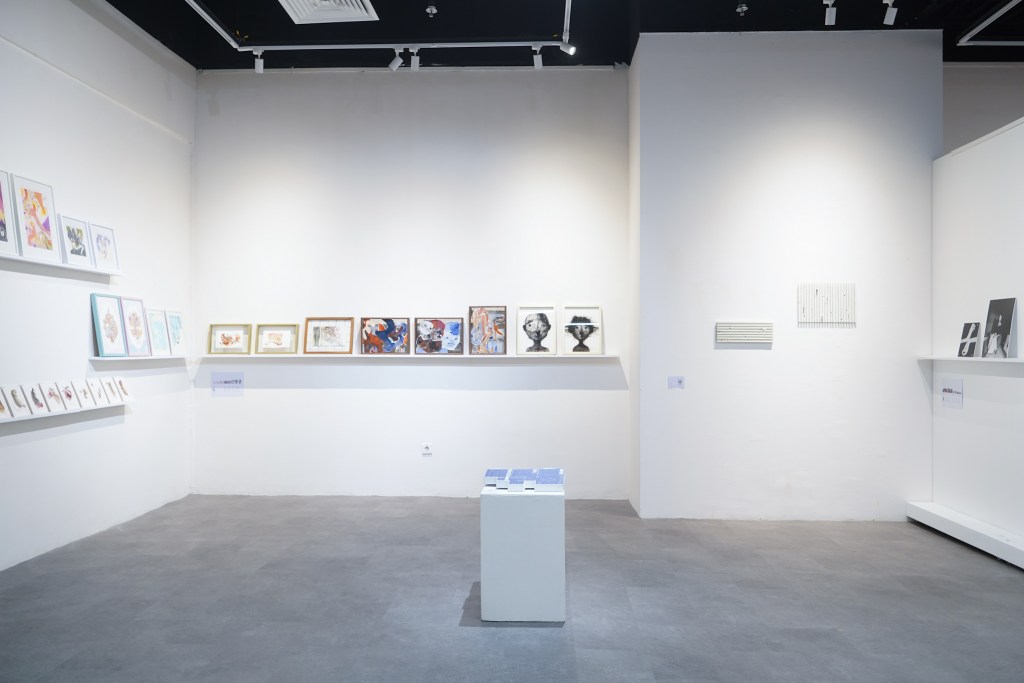

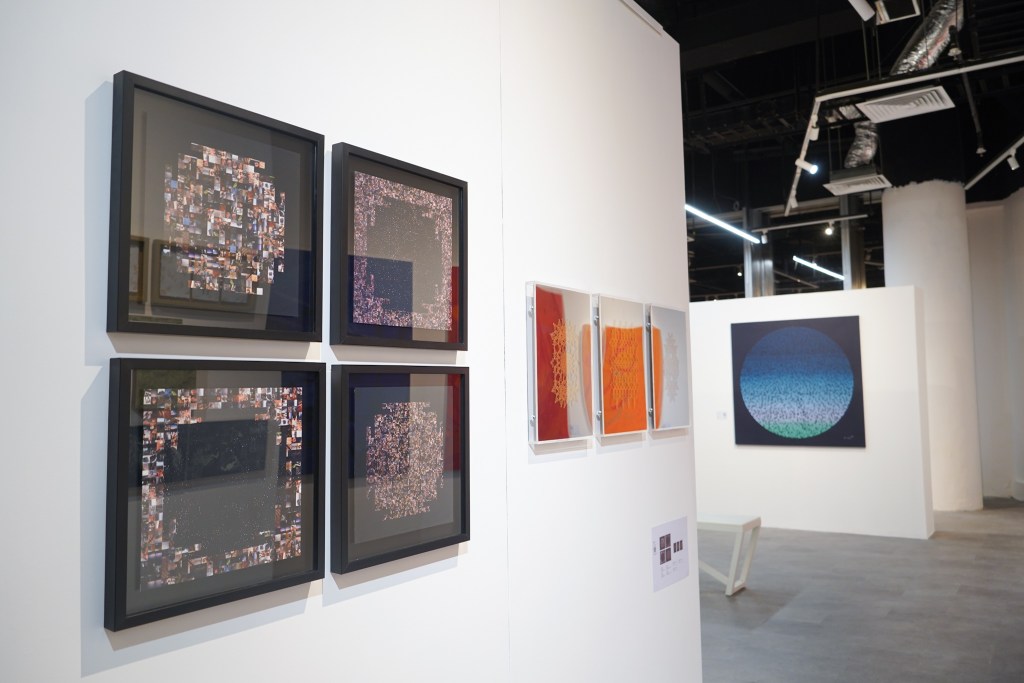
Interestingly, in the layout of the exhibition space, the works are not grouped by subtheme. All the works merge into one space without explicit boundaries, making the experience more organic – highlighting the exploration of the medium and the resonance of The Paper Menagerie’s story intuitively (the subthemes are only revealed when reading the catalog). The curatorial decision to tie the exhibition to the medium of paper does not serve as a limitation, but rather opens up a vast space for exploration. The artists’ diverse approaches show how paper can transform, from Mujahidin’s papercut in Seri Where Does All This Beauty Come From (2025) to Widi Pangestu’s recycled paper experiments in Raintree, Moss, Contour (2025). This diversity shows that paper is not just a static medium, but a dynamic space that holds narratives, identities, and memories. Rather than standing alone, these works are interconnected. The Paper Menagerie shows that the fragility of paper can be transformative as a metaphor and visual exploration, as a place for identity and memory to move freely. Like the origami folds in Ken Liu’s story, each texture, stroke and shape in this exhibition reconstructs the vast expanse of natural and human experience.

Aside from being a contributor to Urakan Magazine, Aghnia Amalia also actively writes personal reviews and opinions on various works such as books and movies on her personal Substack and Twitter/X channels.


 URAKAN