
Ismail Noer Surendra · 04.08.25 · News
Bahasa Indonesia · Deutsch
Well, it’s very quiet tonight.
I can’t sleep
because I’m thinking about death.
I’m wondering,
does death exist?
The narrative presented at the beginning of the performance seemed to revive the figure of Harry Roesli, the eccentric artist nicknamed Si Bengal from Bandung. The 57-minute performance seemed to want to bring back the spirit of Harry Roesli’s magical stage performances.
Harry Roesli’s performances, known for their humor, satire, contemporaneity, and eccentricity, were brought back to life by young people from Bandung who joined the Harry Roesli Music House (RMHR). The performance was part of the Maestro Concert at the Yogyakarta Gamelan Festival.
On the evening of Wednesday, July 23, 2025, the Harry Roesli Music House performed several of Harry Roesli’s repertoire pieces at the Concert Hall, Grha Budaya Embung Giwangan. The Maestro Concert featured at the event included a tribute to Sapto Raharjo by the Gayam 16 Community, a tribute to Djaduk Ferianto by Kuaetnika, and a tribute to Harry Roesli by the Harry Roesli Music House.
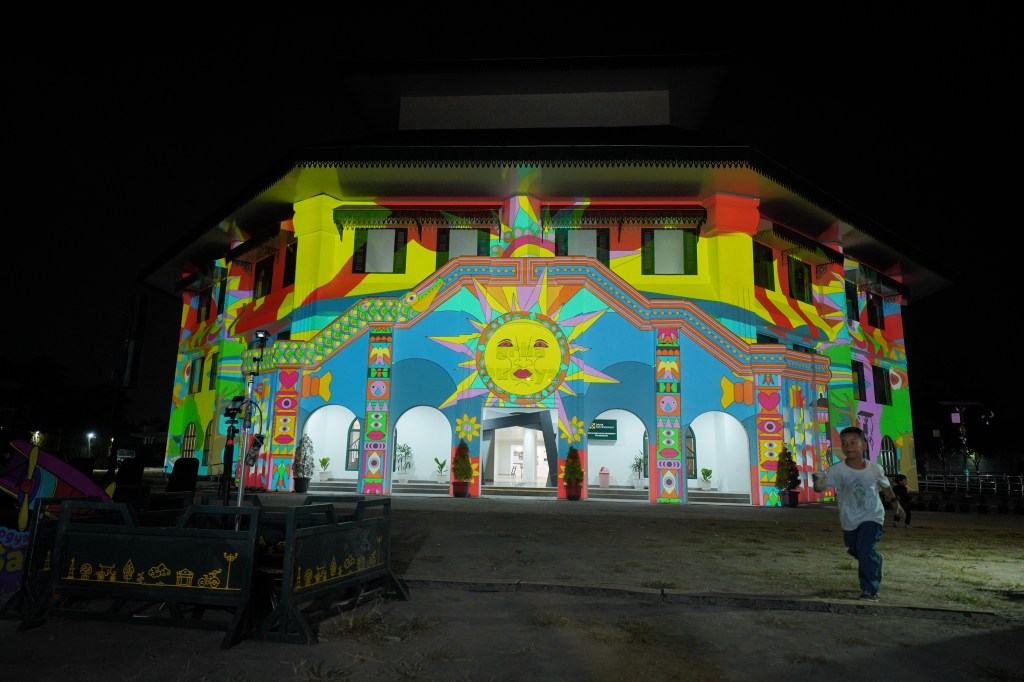
The Embung Giwangan Concert Hall that night seemed to be celebrating Harry Roesli. The figure who passed away on December 11, 2004, seemed to have been summoned back to perform that night. Unlike the other two performances, which seemed to focus solely on musical performances, the show presented by RMHR was more like an operetta. They put on a multimedia performance that combined dialogue, theatrical elements, singing, and dancing.
Harry Roesli’s mischievousness seemed to have entered the hearts of the school-aged children who performed in the show. The performers were junior high and high school students. They were music school students studying at RMHR. The school-aged children played a set of Sundanese gamelan instruments alongside modern band instruments.
These children were encouraged to be as rebellious as Harry Roesli. They were made to perform freely, just like the performances presented by the Maestro in Opera Ken Arok, Teater Koma, Depot Kreasi Seni Bandung (DKSB), or Gang of Harry Roesli. They arranged the Maestro’s works in a contemporary way. The songs they performed were Kerak Bumi (Epilogue from the album Titik Api), Sekar Jepun, Kebo Giro, Bedug Jepang, Orang Basah, and Jangan Menangis Indonesia. Among these songs, RMHR also included Harry Roesli’s controversial songs Cio Cio Cio Wer Kewer and Lagu Terpanjang di Dunia.

Layala Krisna Patria knows exactly how to capture the audience’s attention, just like her father often did. While others only put on musical performances, her group’s performance was presented in a theatrical manner. This was done to convey the ideas they wanted to express.
Backstage, Yala revealed that the performance was indeed attempted in the same way her late father used to do. The performance was made to seem silly, eccentric, and playful, but with a deeper meaning. In her music, Yala explained that the concept is freedom.
“Breaking the concept, you know, because he (Harry Roesli) didn’t like following set rules. It means that freedom of expression has no boundaries. For example, when I asked him what jazz music is, he replied, ‘Do you want to know what jazz music is?’ Then he took me to the piano studio, and I thought he’d play the piano showing jazz chords or something, but he just opened the piano and played it with his butt. ‘That’s jazz,’ he said,” Yala explained.
Yala also revealed that the children were featured in order to regenerate gamelan enthusiasts and listeners of Harry Roesli. When introduced to Harry Roesli’s songs, the children admitted that they were confused about how to enjoy the songs. However, this is part of the process of learning to love music. Yala also wanted to convey that gamelan music is not just for older people, but can also be enjoyed and played by young people.
“This is one way to get them interested in gamelan, for me. Because if we introduce gamelan using the old method, it takes time. It’s a process. It’s not that they won’t like it, if you put it that way. You don’t dislike music, you just haven’t experienced it yet. This is one way to ensure there is regeneration,” he said.
In the performance, Yala indeed wanted to recreate the kind of presentation her father used to do. Something that is rarely seen in public today in its entirety. Presenting such a performance, according to Yala, is also part of reintroducing Harry Roesli’s legacy, as few in the current generation are familiar with him.
“They (the young performers) first heard Harry Roesli’s songs and were confused. It’s a simple question for young people: ‘How do you dance to music like this?’ They were thinking about the dance moves, right? But that’s how it goes. Eventually, they explored it and ended up enjoying Harry Roesli. We have to admit that in this generation, many people don’t know about Harry Roesli. But when there are children involved, my mission is for the young people to play so they can spread it to their friends,” explained Yala.
Harry Roesli’s performances, in all their forms, are always worth watching and following. In this multimedia show, we are treated to unexpected surprises. Harry Roesli’s performances, which often break the mold, leave many people eagerly awaiting what miracles will be unveiled on stage.

During the nearly hour-long performance, RMHR showcased a variety of acts. These included a wedding sketch, a street performer who suddenly appeared from the audience seats, an intern practicing percussion, and even playing music with kitchen utensils. RMHR seemed to make use of every possible opportunity they could present on stage.
Despite its unconventional nature, the performance still felt sacred when “Sekar Jepun” was played. The Sundanese lyrics, spoken like a magical incantation, carried a mystical power.
Dina hate nu daria,
Da mi na,
Dipibanda ku balarea
Ngan hanjakal nyatana
Jadi pacengkadan,
which means:
in sincerity
da mi na (Sunda Karawitan scale)
belongs to everyone
but unfortunately later
became a source of contention.
The songs in the Titik Api album are very well known among progressive rock music lovers. The audience is transported to a surreal world. Many music critics consider the songs in the Titik Api album to be Harry Roesli’s successful attempt to elevate gamelan music to a higher level. The gamelan music in the album blends beautifully with modern instruments to produce magical arrangements. A composition that, to this day, has yet to be matched by other musicians.
“Don’t turn off my desk lamp,” Harry Roesli’s final words before passing away seem to have been carried forward by his fans. His works, which have penetrated the depths of the soul, have provided an extraordinary experience for music lovers in Indonesia.
The tribute performance to Harry Roesli that evening was indeed in line with the vision of the Yogyakarta Gamelan Festival, which aims not only to present musical performances but also to create a space for homage and reflection on the Maestro’s dedication to nurturing, reviving, and transforming gamelan as a medium of expression that is free, transcending time and boundaries.
The performance indeed evoked a sense of longing for Harry Roesli among many people, even those who had never met him or even watched his performances. Opening with a narrative about death; interspersed with lively music; and closing with “Jangan Menangis Indonesia,” the performance successfully prompted the audience to reflect on the realities of life today.
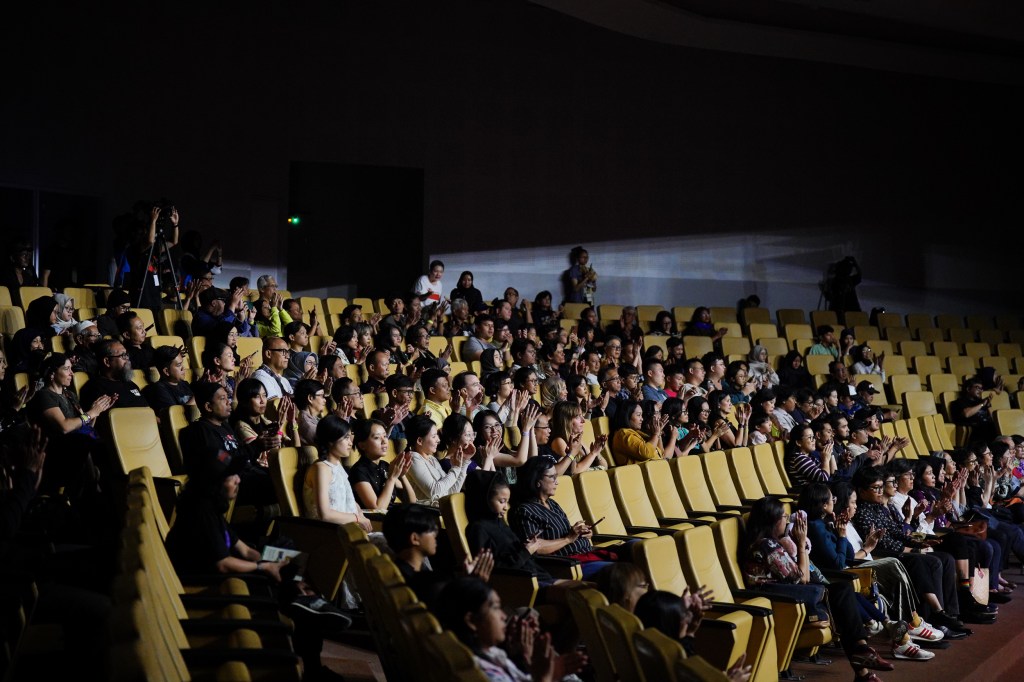
The tribute performance to Harry Roesli that evening was indeed in line with the vision of the Yogyakarta Gamelan Festival, which aims not only to present musical performances but also to create a space for homage and reflection on the Maestro’s dedication to nurturing, reviving, and transforming gamelan as a medium of expression that is free, transcending time and boundaries.
The performance indeed evoked a sense of longing for Harry Roesli among many people, even those who had never met him or even watched his performances. Opening with a narrative about death; interspersed with lively music; and closing with “Jangan Menangis Indonesia,” the performance successfully prompted the audience to reflect on the realities of life today.

A freelance writer who loves many things. Working on many writing projects in the fields of music, football, fine arts, theater, and some other journalistic work. This writer from Lamongan is currently living in Yogyakarta.


 URAKAN